How providing value upfront increased new client dashboards by 134%
The team brought me a large vision for a business dashboard, but the timeline was short and resources were tight. We scoped down to a focused MVP and used a multi-stage feedback strategy to build the case for the fuller concept. The tool launched with a 134% lift in new client dashboards.


Team
Skills
Timeline
Impact
Problem
A large vision that needed to be rolled out in parts
The PM who lead our small growth team defined a very real opportunity to build value for users, but the vision was a new dashboard with multiple tools. We needed to ship smaller, and I led the framework for how we could ship incremental value and build signal towards the bigger vision. Our goal was to grow the number of clients using the product.
Solution
Ship one tool with user feedback as a priority
We designed one tool first, placed it in the existing client dashboard, and keep the user flow simple and modular. Alongside the launch I led a feedback strategy that we could use to show leadership signal in the concept, and did some light vision work to show how our existing client dashboard could transform under the new mental model.
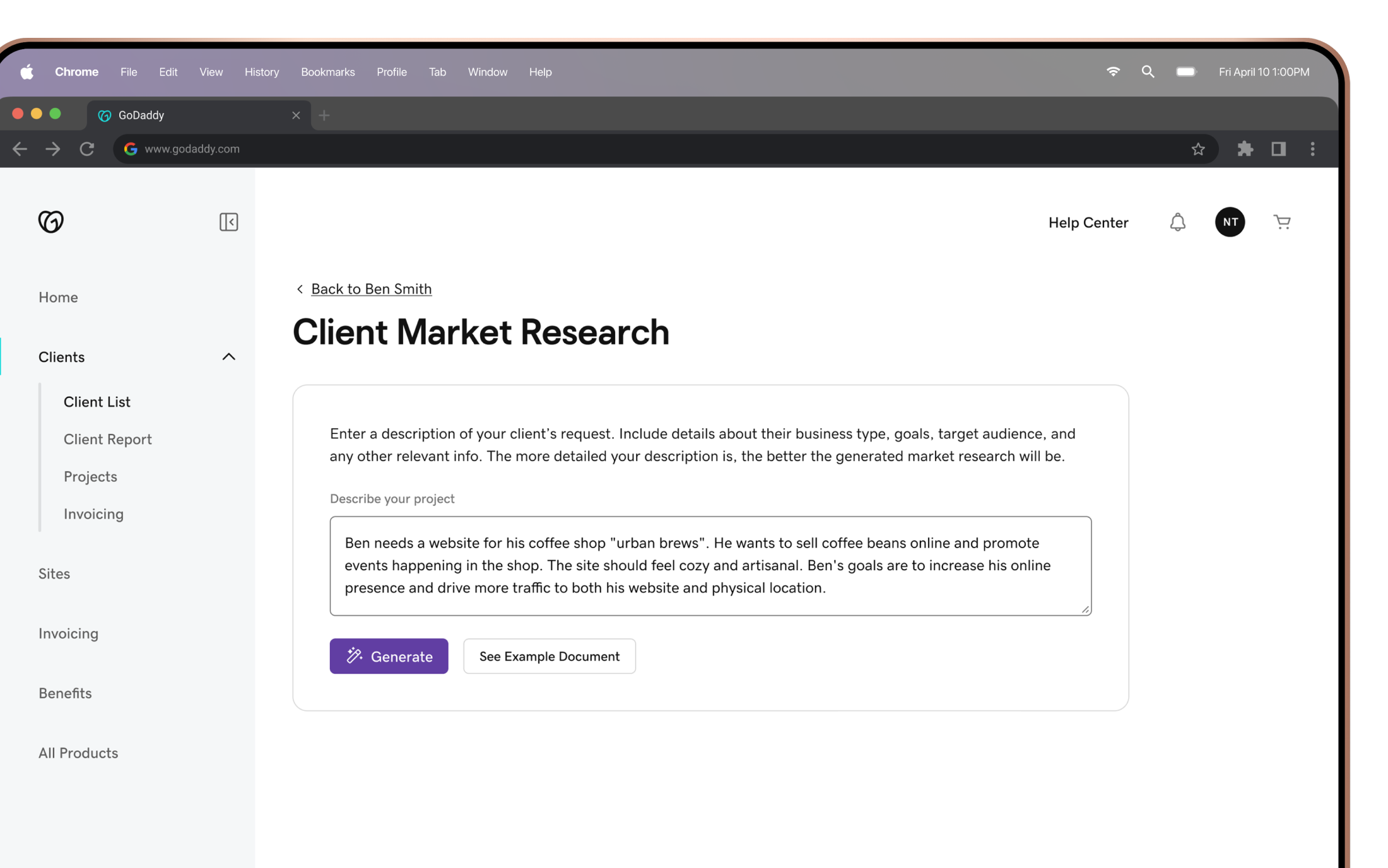
Concepts to show where the vision leads
One of the biggest challenges with this project was reconciling the UX debt on the existing client dashboard while trying to add more tools and features. This concept work re-evaluates the most important jobs to be done for a user managing their client and folds in the new tools from our growth vision.
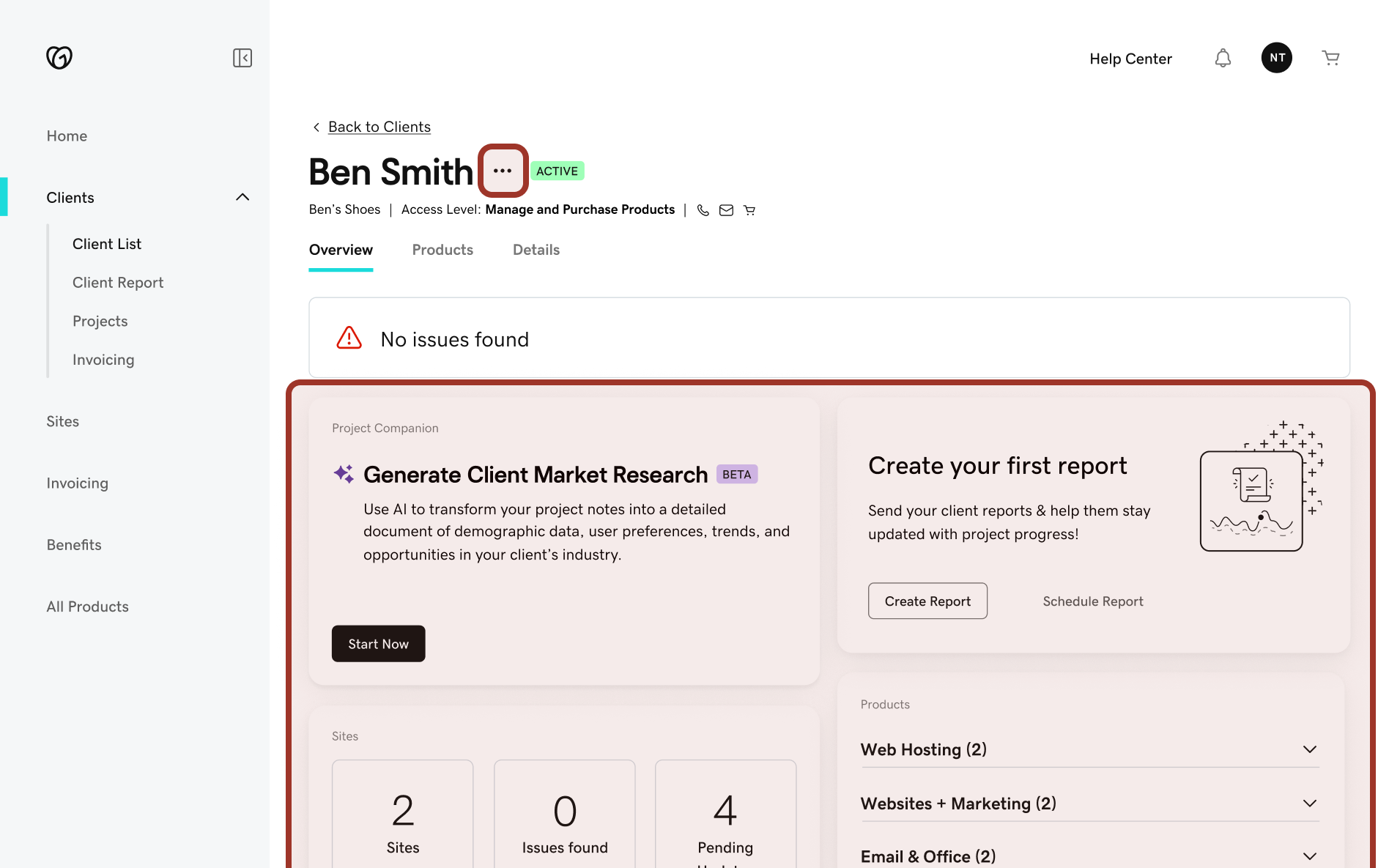
- logging in as a client, the main action, was buried in a menu.
- Tools sat without a clear mental model to organize them.
The chosen direction reduces cognitive load, centralizes the most important existing features and structure the dashboard around the actual client project lifecycle.
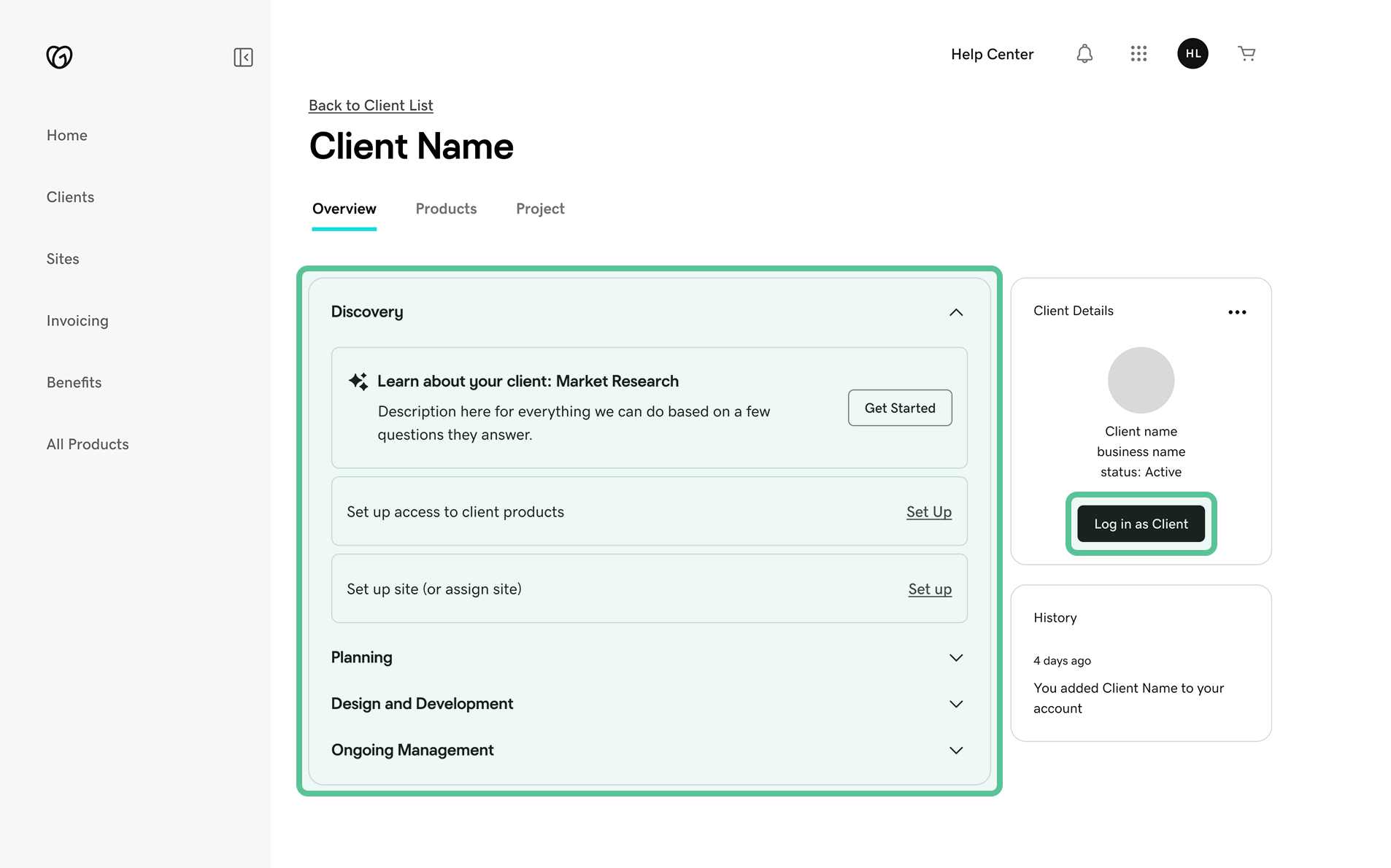
- Logging in as client is the most utilized feature and has clear hierarchy on the page.
- all tools are organized in order of a projects lifecycle.
Check out all three concepts:
Multi-stage feedback to build signal
The types of research were:
- Quick task-based prototype tests for signal.
- Live demo-account tests for the quality of the AI outputs.
- A feedback module shipped with the first launch for continued learning.
Successes from this strategy:
- Momentum: by running signal tests early and often, then sharing back with stakeholders, we built momentum for the bigger vision and earned resources to expand.
- Accelerated learning: testing with real AI outputs, not mocked data, caught quality issues we never would have found in a prototype, and gave stakeholders something concrete to react to before launch.
Impact
Showing future signal and moving the existing needle
Increase in target KPI
Impactful learning metric
Buy-in
Working this way got us in front of users quicker and produced real signal. It also let us learn faster, so as we moved toward the bigger vision we had real learnings to check against.
One of our biggest learnings came after launch when we realized many users who don’t have clients set up yet don’t have access to the new tool. When we created a path to use the tool by spinning up a sample client, new dashboard instances rose 800%.
Reflection
Shipping the tool without the surrounding environment was awkward
Discovery on the tool was low, and it would keep feeling awkwardly placed until we could change more of the client dashboard around it. We knew this might happen in the early stages of planning but took the chance anyway.
In retrospect, a little bit of structural work up front would have let us scale faster post-launch. I’d push earlier to bundle the smallest set of dashboard changes with the MVP so the new tool had a place designed for it, not a spot it had to fit into.
Next case study